CRM with a phone system
A CRM with a built-in phone system
The phone system is part of the CRM. Call customers and take their calls in the browser, from the product that holds their record, their deals and their support email, with call groups, a phone menu, hold, transfer and recordings. Calls go through your own Twilio account, which bills you by the minute, with no markup from us.
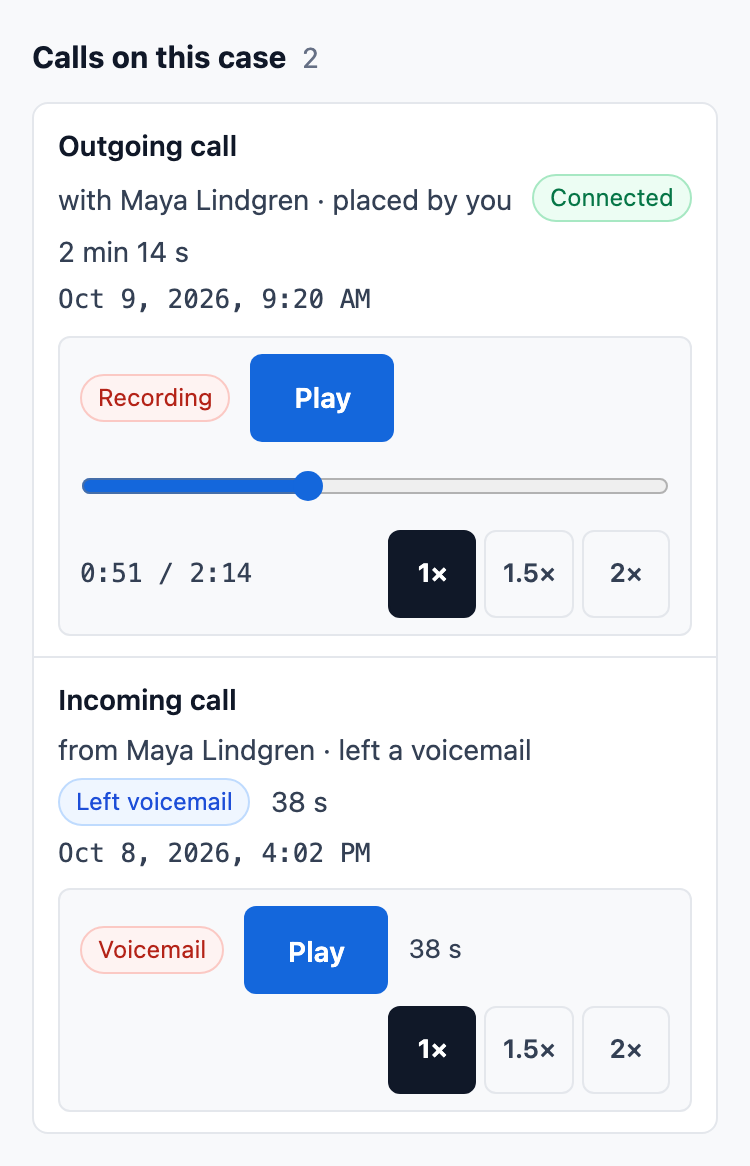
Call from the record you are working on
Open a contact and press one of their numbers: the call starts in the browser, and when it ends it sits on their timeline with the emails, cases, deals and notes, so the next person to ring them knows what was said.
- Several numbers for each person, one marked to call first.
- A call made from a mobile is logged by hand, with how it went and a callback task in one click.
- Search finds a contact or a company by the number that just rang.
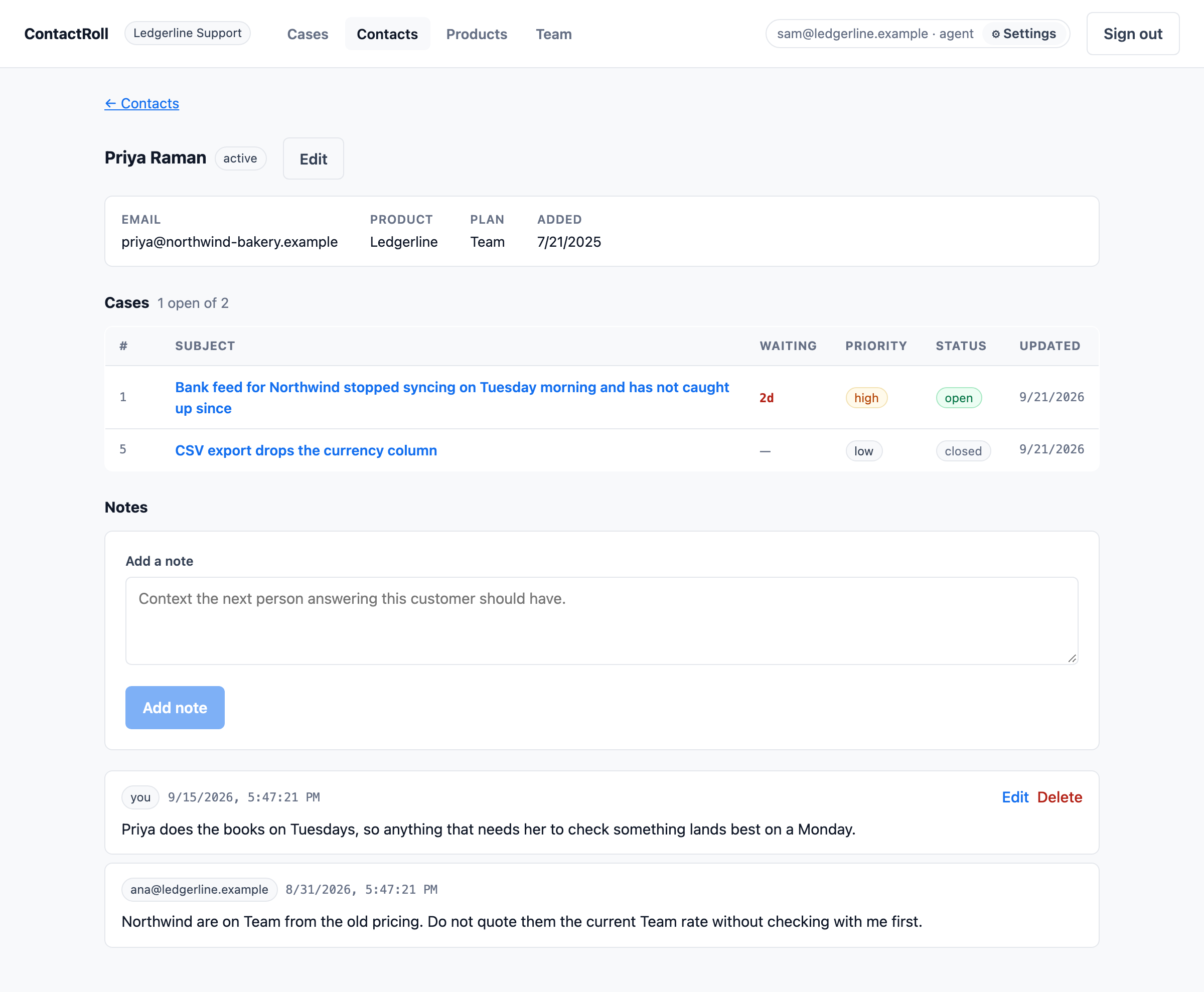
Inbound calls for the sales team
Point the number on your website at a Sales call group, and a lead who rings reaches whoever in sales is free. The call is on the lead’s record before anybody types a note.
- On Plus, a caller who already has an account owner rings that owner first, alone, for 5 to 30 seconds.
- A missed call becomes a case on the caller’s record, so a lead is not lost to a busy afternoon.
- Hold and transfer to a colleague on every plan; on Plus, talk to them first while the lead waits.
What the minutes cost
There is no calling plan to buy from us. Your own Twilio account bills each minute at its published rates, and ContactRoll adds nothing. At Twilio’s US rates read October 14, 2026, 2,000 browser minutes a month, half of them recorded, on one local number, come to about $34.
- The calling cost calculator puts your own minutes and team size against per-seat phone plans.
- A call put on hold or transferred also pays Twilio’s conference minutes.
Worked example
Following up a quote by phone
A seller with a $4,800 deal waiting on a signed proposal, and a customer who went quiet.
- She opens the deal, then the customer’s contact page, and presses the number marked to call first.
- The customer asks for a change to the scope. When the call ends she writes that in its notes and says how it went.
- She moves the deal to its next stage and adds a callback task for Thursday morning.
- On Thursday the customer rings the sales number first. On Plus, because she owns the account, ContactRoll rings her alone before the group.
- Both calls are on the customer’s timeline, and the stage change is in the deal’s history.
Also in ContactRoll
Deals beside the calls
A deal has an amount, a stage and a close date, and its page holds the cases linked to it, its contacts and its tasks.
Pay by the minute
Twilio bills your own account for each call at its published rates. The calling cost calculator shows what your minutes would cost.
Calls in the browser
Calls are placed and answered in the browser, on a computer with a microphone.
Questions
What does a CRM with built-in calling need?
In ContactRoll: your organization’s own Twilio account, connected once by an administrator, and a browser with a microphone. Calls ring call groups, land on the customer’s record, and can be recorded.
What do the calls cost?
Twilio bills your own account by the minute at its published rates, with no markup from us. For example, 2,000 minutes a month in the browser, half of them recorded, with one number, come to about $34 at Twilio’s US rates read October 14, 2026. A call put on hold or transferred also pays Twilio’s conference minutes.
Which plan has the phone menu?
Plus: phone menus, owner-first ringing and warm transfer. Every plan, Free included, has call groups, voicemail, recording, hold and cold transfer.